Cain, overo Il primo omicidio


Description
It is the first murder in human history, yet, as we know, not the last. For according to biblical tradition, we are all descended from a murderer: Cain, the first human to be born on earth. Together with his younger brother Abel, he is raised by his parents Adam and Eve in reverence for God. But when Abel’s ritual offerings are favored one day, dark impulses break through: Cain kills Abel, thereby incurring the wrath of God.
The story from Genesis raises numerous questions that have preoccupied humanity ever since. Why am I not as well off as others? Why are some people seemingly favored for no reason? Is the existence of evil inherent in human nature? Does it perhaps even serve a hidden function within the plan of creation? Are we all part of a divine experiment? Can or must one forgive a murderer? Is peace even possible, or is the existence of violence indelibly inscribed in human history?
Alessandro Scarlatti received much of his musical education in Rome, the center of oratorio composition at the beginning of the 18th century. He also benefited from the era of the “opera proibita”: between 1698 and 1710, opera performances were banned in Rome, and composers concealed their stage works behind the façade of oratorios, causing the genre to develop in an increasingly dramatic direction. With this experience, Scarlatti arrived in Venice in 1706, then the center of opera. The following year he composed CAIN AND ABEL, a gripping dramatization of the biblical story, which he sets in virtuosic Baroque sound.
The acclaimed production by Dietrich W. Hilsdorf, which premiered in 2020 at the Aalto Theatre in Essen, focuses on the existential core of biblical prehistory. Hilsdorf presents the first fraternal conflict as a timeless human drama, shaped by envy, guilt, and the desperate search for recognition. Under the direction of Rubén Dubrovsky, the music unfolds a powerful intensity that is both precise and expressive.
participants
Inszenierung
Szenische Einstudierung
- Carolin Steffen-Maaß
Bühne
Kostüme
Licht
Dramaturgie
cast
Musikalische Leitung
Adam
Gott
Teufel
Laute / Theorbe I
Laute / Theorbe II
Cembalo
Orchester
Please refer to the respective event listings for the current cast.
Events and Tickets
-
Alessandro Scarlatti07:30 PM to OpernhausEinführung 30 Minuten vor Vorstellungsbeginn im Erfrischungsraum Süd | Keine PauseKain und AbeltoCain, overo Il primo omicidioOratorium in zwei TeilenLibretto von Antonio OttoboniIn italienischer Sprache mit deutschen und englischen ÜbertitelnEine Produktion des Aalto Theater Essen
cast
-
Musikalische Leitung
-
Kain
-
Abel
-
Eva
-
Adam
-
Gott
-
Teufel
-
Laute / Theorbe I
-
Laute / Theorbe II
-
Cembalo
-
Orchester
-
-
Alessandro Scarlatti04:00 PM to OpernhausEinführung 30 Minuten vor Vorstellungsbeginn im Erfrischungsraum Süd | Keine PauseCain, overo Il primo omicidiotoCain, overo Il primo omicidioOratorium in zwei TeilenLibretto von Antonio OttoboniIn italienischer Sprache mit deutschen und englischen ÜbertitelnEine Produktion des Aalto Theater Essen
cast
-
Musikalische Leitung
-
Kain
-
Abel
-
Eva
-
Adam
-
Gott
-
Teufel
-
Laute / Theorbe I
-
Laute / Theorbe II
-
Cembalo
-
Orchester
-
-
Alessandro Scarlatti07:30 PM to OpernhausEinführung 30 Minuten vor Vorstellungsbeginn im Erfrischungsraum Süd | Keine PauseCain, overo Il primo omicidiotoCain, overo Il primo omicidioOratorium in zwei TeilenLibretto von Antonio OttoboniIn italienischer Sprache mit deutschen und englischen ÜbertitelnEine Produktion des Aalto Theater Essen
cast
-
Musikalische Leitung
-
Kain
-
Abel
-
Eva
-
Adam
-
Gott
-
Teufel
-
Laute / Theorbe I
-
Laute / Theorbe II
-
Cembalo
-
Orchester
-
-
Alessandro Scarlatti06:00 PM to OpernhausEinführung 30 Minuten vor Vorstellungsbeginn im Erfrischungsraum Süd | Keine PauseCain, overo Il primo omicidiotoCain, overo Il primo omicidioOratorium in zwei TeilenLibretto von Antonio OttoboniIn italienischer Sprache mit deutschen und englischen ÜbertitelnEine Produktion des Aalto Theater Essen
cast
-
Musikalische Leitung
-
Kain
-
Abel
-
Eva
-
Adam
-
Gott
-
Teufel
-
Laute / Theorbe I
-
Laute / Theorbe II
-
Cembalo
-
Orchester
-
-
Alessandro Scarlatti07:30 PM to OpernhausEinführung 30 Minuten vor Vorstellungsbeginn im Erfrischungsraum Süd | Keine PauseCain, overo Il primo omicidiotoCain, overo Il primo omicidioOratorium in zwei TeilenLibretto von Antonio OttoboniIn italienischer Sprache mit deutschen und englischen ÜbertitelnEine Produktion des Aalto Theater Essen
cast
-
Musikalische Leitung
-
Kain
-
Abel
-
Eva
-
Adam
-
Gott
-
Teufel
-
Laute / Theorbe I
-
Laute / Theorbe II
-
Cembalo
-
Orchester
-
-
Alessandro Scarlatti07:30 PM to OpernhausEinführung 30 Minuten vor Vorstellungsbeginn im Erfrischungsraum Süd | Keine PauseCain, overo Il primo omicidiotoCain, overo Il primo omicidioOratorium in zwei TeilenLibretto von Antonio OttoboniIn italienischer Sprache mit deutschen und englischen ÜbertitelnEine Produktion des Aalto Theater Essen
cast
-
Musikalische Leitung
-
Kain
-
Abel
-
Eva
-
Adam
-
Gott
-
Teufel
-
Laute / Theorbe I
-
Laute / Theorbe II
-
Cembalo
-
Orchester
-
Past Events
-
Alessandro Scarlatti06:00 PM to OpernhausPremiereEinführung 30 Minuten vor Vorstellungsbeginn im Erfrischungsraum Süd | Keine PauseCain, overo Il primo omicidiotoCain, overo Il primo omicidioOratorium in zwei TeilenLibretto von Antonio OttoboniIn italienischer Sprache mit deutschen und englischen ÜbertitelnEine Produktion des Aalto Theater Essen
cast
-
Musikalische Leitung
-
Kain
-
Abel
-
Eva
-
Adam
-
Gott
-
Teufel
-
Laute / Theorbe I
-
Laute / Theorbe II
-
Cembalo
-
Orchester
-
To play this content, a connection to an external service will be established. Personal data (e.g. your IP address) will be transmitted to the respective provider.
Impressions
-
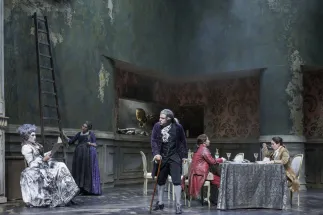 The Devil (Baurzhan Anderzhanov), Eve (Tamara Banješević), Adam (Dmitry Ivanchey), Cain (Adriana Bastidas-Gamboa) and Abel (Alina König Rannenberg) © Thilo Beu
-
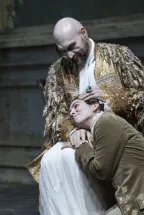 God (Xavier Sabata) and Abel (Alina König Rannenberg) © Thilo Beu
-
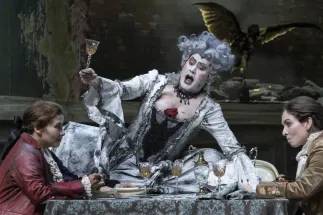 Cain (Adriana Bastidas-Gamboa), the Devil (Baurzhan Anderzhanov) and Abel (Alina König Rannenberg) © Thilo Beu
-
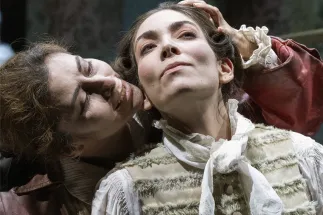 Cain (Adriana Bastidas-Gamboa) and Abel (Alina König Rannenberg) © Thilo Beu
-
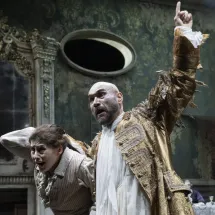 God (Xavier Sabata) and Cain (Adriana Bastidas-Gamboa) © Thilo Beu
-
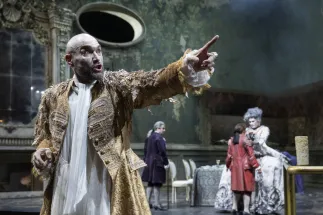 God (Xavier Sabata), Adam (Dmitry Ivanchey), the Devil (Baurzhan Anderzhanov) and Cain (Adriana Bastidas-Gamboa) © Thilo Beu
-
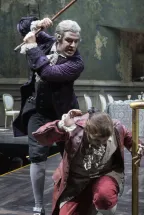 Adam (Dmitry Ivanchey) and Cain (Adriana Bastidas-Gamboa) © Thilo Beu
-
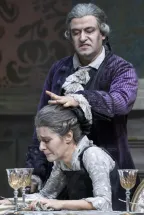 Adam (Dmitry Ivanchey) and Eve (Tamara Banješević) © Thilo Beu
-
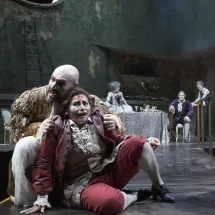 God (Xavier Sabata), Cain (Adriana Bastidas-Gamboa), the Devil (Baurzhan Anderzhanov), Adam (Dmitry Ivanchey) and Eve (Tamara Banješević) © Thilo Beu
-
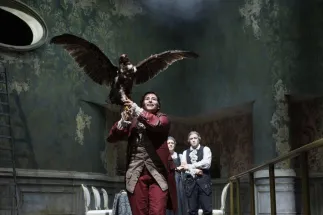 Cain (Adriana Bastidas-Gamboa), Eve (Tamara Banješević) and Adam (Dmitry Ivanchey) © Thilo Beu
-
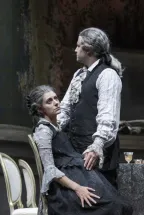 Adam (Dmitry Ivanchey) and Eve (Tamara Banješević) © Thilo Beu
-
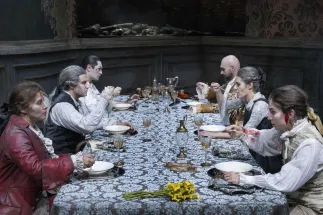 Cain (Adriana Bastidas-Gamboa), Adam (Dmitry Ivanchey), the Devil (Baurzhan Anderzhanov), God (Xavier Sabata), Eve (Tamara Banješević) and Abel (Alina König Rannenberg) © Thilo Beu


Hell is other people.

